
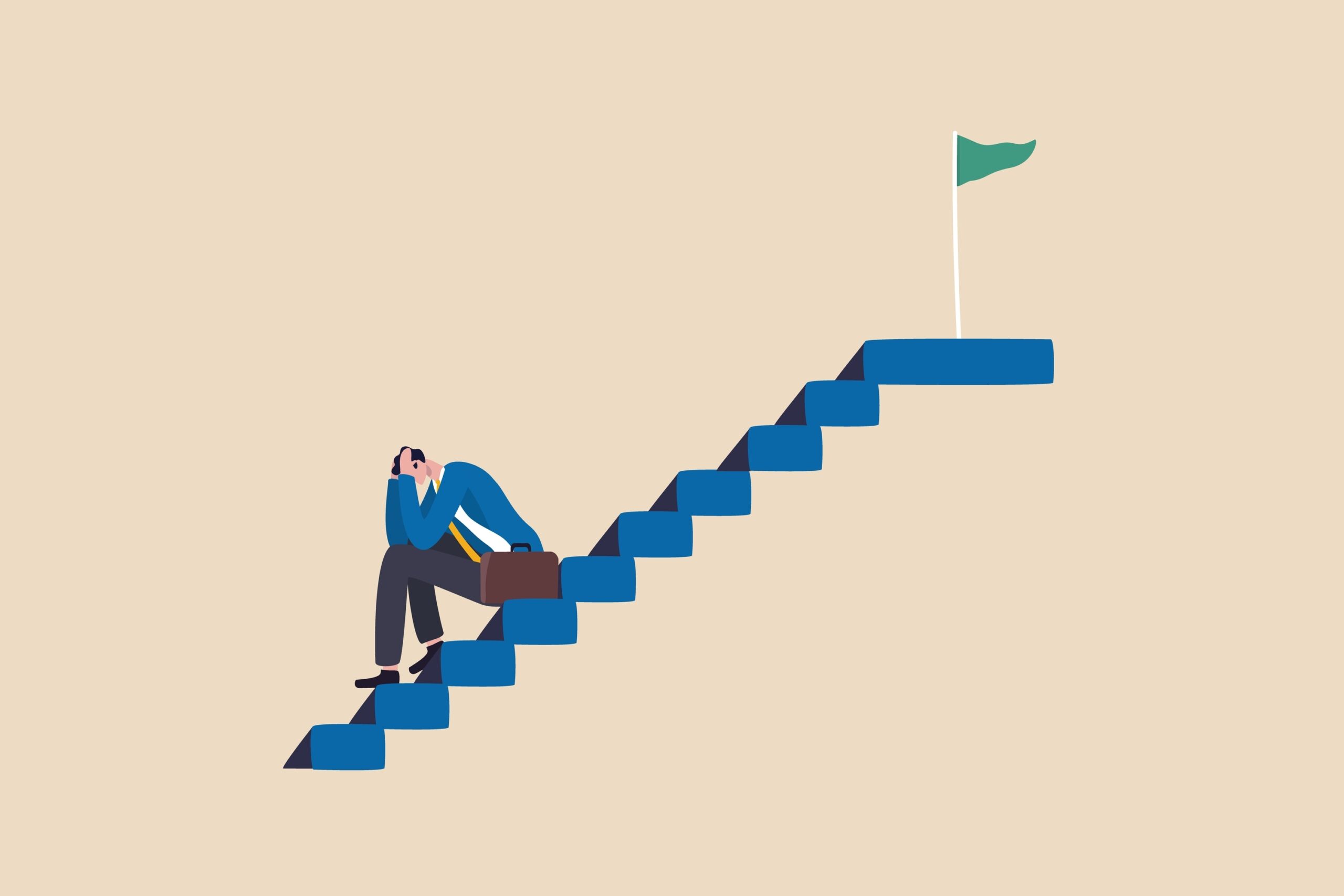
We have all felt it. That cold grip in the chest at 3:00 AM when the house is quiet, but your mind is racing at a hundred miles an hour. It is the nagging suspicion that perhaps we are not cut out for this. It is the fear that one wrong move, one lost client, or one market shift could bring everything we have built crashing down.
Running a business isn’t a straight line, it’s a roller coaster of emotions, challenges, and breakthroughs. Yet, so often, we try to present a façade of linear progress. We look at social media and see other entrepreneurs posting about their “wins” and “10x growth,” and we wonder why our reality feels so much messier. This discrepancy breeds a deep, pervasive fear of failure.
In this post, let’s pull back the curtain on the emotional reality of entrepreneurship. We are going to explore the psychological landscape of business growth, inspired by the From Launch to Legacy podcast. We will break down the seven stages of business growth — from the Early Struggle to the Death Rattle — and discuss how to navigate the specific fears associated with each. We will also look at how professional guidance can stabilize this journey.
Understanding the Psychology of Business Consulting
When we talk about fear in business, we often treat it as a personal defect. We think, “If I were a better leader, I wouldn’t be scared.” However, experienced advisors in business consulting know that fear is actually a lagging indicator of growth—or a warning sign of stagnation. It is data, not a diagnosis of incompetence.
The fear of failure is usually rooted in the unknown. When you are operating without a map, every shadow looks like a monster. This is why understanding the lifecycle of a business is so critical. When you realize that the chaos you are experiencing is a predictable stage called “White Water,” it stops feeling like a personal failure and starts looking like a manageable problem.
We need to normalize the conversation around stress. As noted in resources like the Confidence Tracker, tracking your mental state is just as important as tracking your P&L statement. If your business is growing but your confidence is tanking, something is broken in the system, not in you.
The Early Struggle | Why Every Business Consultant Faces Doubt
Every business starts in the mud. This is the “Early Struggle.” In this phase, everything feels hard. You are the janitor, the CEO, the salesperson, and the customer support agent. The fear here is primal: “Will this ever work?”
We often see entrepreneurs in this stage paralyzed by the idea of the “perfect launch.” They spend months refining a logo or a website, terrified of putting their offer into the world because rejection feels fatal. If you are acting as your own business consultant, you have to advise yourself to prioritize cash flow over perfection.
Consider the story of a founder named Michael. He spent six months building a software platform, draining his savings. He was terrified to sell it because he feared it wasn’t “ready.” The fear of failure manifested as procrastination. It wasn’t until he forced himself to pre-sell the solution that he realized the market wanted it, bugs and all. The Early Struggle requires resilience, but more importantly, it requires the courage to be imperfect.
The Fun Stage | When Business Consultant Services Seem Unnecessary
Then comes the “Fun Stage.” Sales are coming in, the market is responding, and for the first time, you feel like a genius. The fear of failure recedes, replaced by a rush of dopamine.
However, this stage has a hidden danger. The fear here is often suppressed. We become overconfident. We stop looking at the data because the bank balance looks good. This is often when entrepreneurs stop seeking outside advice or business consultant services because they believe they have “figured it out.”
But growth without structure is just a delayed crisis. In the Fun Stage, we must remain vigilant. We need to be building the systems for the next phase, not just enjoying the ride. If we don’t, we inevitably crash into the next, most turbulent phase.
Surviving White Water | The Biggest Challenge
“White Water” is where success and chaos look identical. You have grown so much that your old systems (or lack thereof) break. You are missing emails. You are hiring the wrong people out of desperation. Cash flow is high, but so are expenses, and the margins are getting squeezed.
For many business consulting firms, this is the stage where they see clients panic. The entrepreneur feels like they are failing because, despite making more money, they are more stressed than ever. They think, “I must be doing something wrong.”
The truth is, you are just in White Water. The fear here is the fear of losing control. You can no longer hold the entire business in your head. You have to delegate, which is terrifying for a founder who treats the business as their baby.
To survive White Water, you must shift from being a personality-driven business to a process-driven business. This is painful. It requires saying “no” to opportunities that don’t fit the new structure. It requires firing clients who drain resources. It requires facing the fear that you might not be the best person to do every single task anymore.
Reaching Predictable Success | Implementing Business Consulting Solutions
The goal of navigating White Water is to reach “Predictable Success.” This is the holy grail. In this stage, structure creates freedom. You have systems, you have a team, and the business generates revenue without your constant, frantic intervention.
However, fear still exists here. It morphs into the fear of boredom or the fear of sabotage. Entrepreneurs are natural problem solvers. When there are no fires to put out, some of us subconsciously create them just to feel useful.
To maintain this stage, we need high-level business consulting solutions that focus on innovation within structure. We need to find new challenges—new markets, new products, philanthropic endeavors—that satisfy our drive without breaking the machine we worked so hard to build. We must learn to trust the boring consistency of success.
The Treadmill | The Silent Killer
If we stop innovating in Predictable Success, we slip onto the “Treadmill.” The business is stable, but it is stuck. You are working hard, but you aren’t going anywhere. The creativity is gone, replaced by rote administration.
The fear here is insidious. It is the fear of irrelevance. You see competitors zooming past you (likely in their Fun Stage), and you feel heavy and slow. You might try to overcompensate by launching ill-conceived marketing campaigns or “shaking things up” unnecessarily.
As a business consultant, we often warn clients that the Treadmill feels safe, but it is actually a slow decline. To get off the Treadmill, you have to be willing to take risks again. You have to re-inject the entrepreneurial spirit that got you through the Early Struggle. You have to face the fear of rocking the boat.
The Big Rut and The Death Rattle | How Business Consulting Can Save You
If the Treadmill continues too long, the business enters “The Big Rut.” Decline is no longer a fear; it is a reality, but one that is often denied. Revenue is dropping, talent is leaving, and the leadership is paralyzed.
Finally, there is the “Death Rattle.” This is the critical phase where the business will either die or undergo a massive, painful restructuring.
The fear here is overwhelming. It is the realization of the worst-case scenario. However, even here, there is hope. Business consulting interventions in these stages are drastic—they involve cutting costs, pivoting hard, or preparing for an exit. But facing the reality is the only way to salvage value.
We must understand that ending a business or pivoting is not a failure of character. Sometimes, the market moves. Sometimes, we lose our passion. Acknowledging that you are in a Rut is the first step to climbing out of it.
Practical Steps to Reclaim Your Confidence
So, how do we manage these fears? How do we stay grounded when the roller coaster drops?
1. Identify Your Stage
You cannot solve a problem you cannot name. Look at the definitions above. Are you in White Water? Are you on the Treadmill? Admitting where you are instantly lowers anxiety because it gives you a context for your feelings.
2. Use the Confidence Tracker
We strongly recommend using tools to monitor your mindset. The Havins Confidence Tracker details how to track your confidence levels alongside your business metrics. If revenue is up but confidence is down, you are likely heading into a burnout phase or a complexity crisis (White Water). If confidence is high but revenue is flat, you might be in the Fun Stage, blind to upcoming operational debt.
3. Normalize the “Not Knowing”
You do not have to have all the answers. The most confident leaders are the ones who can say, “I don’t know, but I’ll figure it out.” Relieve yourself of the pressure to be omniscient.
4. Build Your Support System
Isolation feeds the fear of failure. When you are alone, your internal monologue has no check and balances. Surround yourself with peers, mentors, or a trusted firm providing business consulting solutions. Being able to say, “I’m terrified I’m going to miss payroll,” to someone who understands removes the sting of shame from the statement.
Moving From Fear to Function
Fear is energy. It is high-octane fuel. The problem is that most of us burn it dirty, creating smoke and pollution in our minds (anxiety, paralysis). We need to refine that fuel.
When you feel the fear of failure rising, ask yourself: “What is this fear telling me to do?”
- If it is telling you to hide, ignore it.
- If it is telling you to check your cash flow, listen to it.
- If it is telling you to have a hard conversation with an employee, act on it.
The antidote to fear is not blind optimism; it is action. It is taking one small step to clarify the unknown. It is sending that invoice, making that call, or booking that strategy session.
The fear of failure is the price of admission for entrepreneurship. If you didn’t care, you wouldn’t be scared. But we cannot let that fear drive the bus. We must relegate it to the passenger seat — it can point out hazards, but it doesn’t get to touch the steering wheel.
Call on Havins Today | Get Your Confidence Back
Your business cannot thrive if you are running on empty. By understanding the seven stages — Early Struggle, Fun Stage, White Water, Predictable Success, Treadmill, Big Rut, and Death Rattle — you can map your current location. You can see that the stress you feel is appropriate for the stage you are in.
Whether you are a solo operator or leading one of the major business consulting firms, the emotional journey is universal. We rise, we fall, we struggle, and we succeed. The key is to keep moving, to keep tracking our confidence, and to reach out for help when the ride gets too wild.
You are not a fraud. You are not a failure. You are a business owner in the arena, and that alone is worth celebrating.
Are you ready to identify exactly which stage your business is in and how to move to the next level of Predictable Success? Don’t let the fear of the unknown hold you back. Contact Havins Business Services, and we’ll help you reclaim your confidence together.
To learn more, listen to the full episode of From Launch to Legacy to dive deeper into these stages.
Frequently Asked Questions (FAQ)
Q. How does the “White Water” stage affect a business owner’s confidence?
The “White Water” stage is often the most damaging to confidence because success and chaos happen simultaneously. During this phase, systems break under the pressure of growth, causing the owner to feel like they are losing control despite increasing revenue. This paradox often leads to imposter syndrome and a fear of imminent failure if operational structures aren’t quickly implemented.
Q. Why is it important to utilize business consultant services during the “Treadmill” stage?
The “Treadmill” stage is dangerous because it feels comfortable and stable, but it represents a lack of growth and innovation. Utilizing outside services during this phase is critical to identify blind spots and inject new strategies that can push the business back into a growth trajectory. Without this external push, the business risks sliding into the “Big Rut” and eventual decline.
Q. Can tracking personal confidence really help with business growth?
Yes, tracking personal confidence is a leading indicator of business health. A sudden drop in confidence often precedes operational issues or burnout, while artificially high confidence can blind an owner to risks during the “Fun Stage.” By monitoring mental resilience alongside financial metrics, owners can make more balanced, proactive decisions rather than reactive ones driven by emotion.