
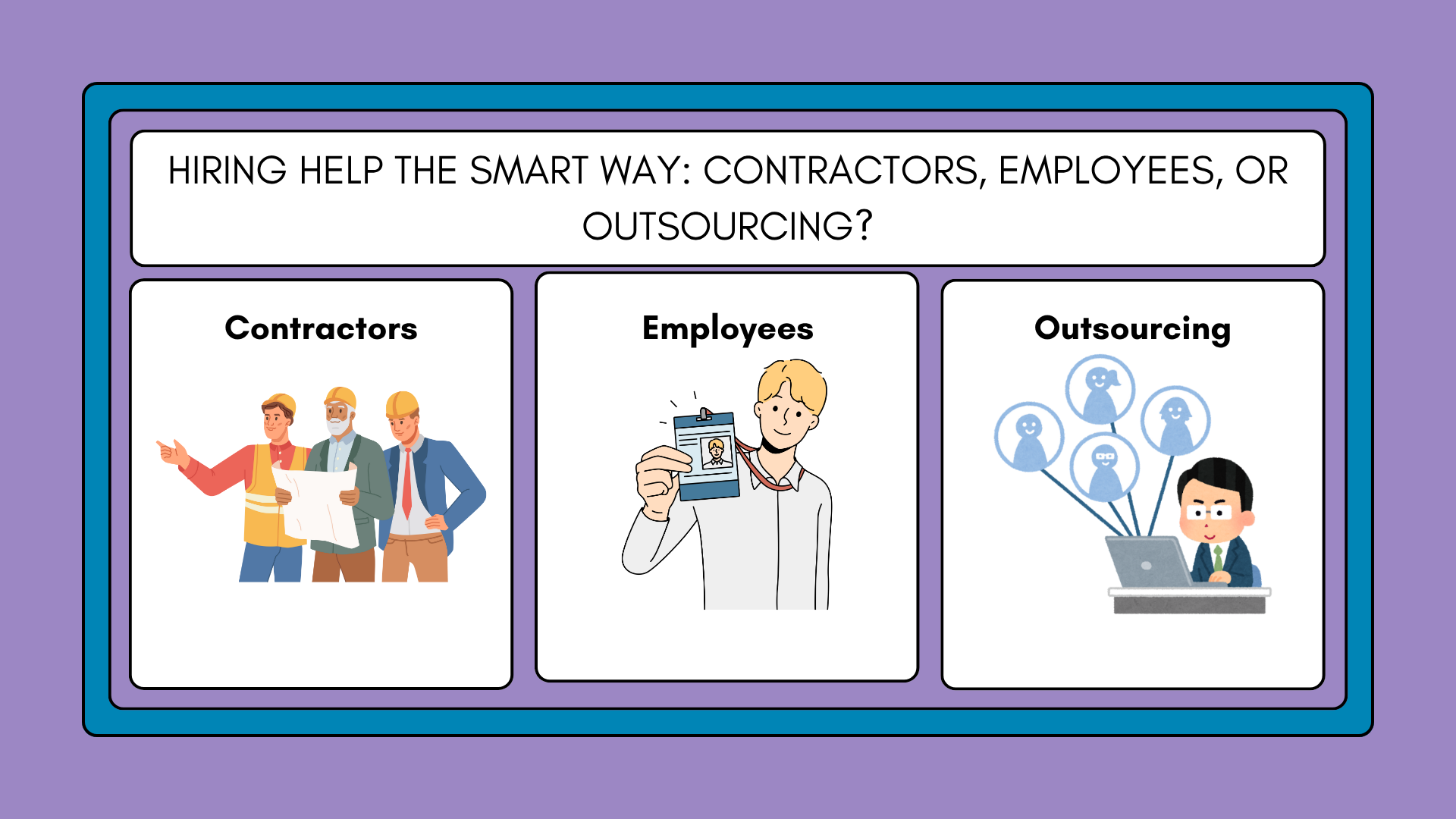
Deciding how to add help is a pivotal moment for any small business owner. It’s not just about finding an extra set of hands; it’s about making a strategic choice that aligns with your long-term goals.
| Method | Best For | Pros | Cons | Key Considerations |
| Independent Contractor | Specialized, short-term projects or specific skills not needed full-time. (e.g., a one-time website redesign) | • Flexibility • No payroll taxes or benefits • Easy to end the relationship | • Less control over workflow • May have multiple clients • Potential for legal misclassification | Are they a 1099? They should set their own hours, use their own tools, and work on a project basis. |
| Employee | Core, long-term functions and tasks essential to the daily operation of your business. (e.g., a full-time bookkeeper or office manager) | • You have full control over their work • They are dedicated to your business • Easier to build a cohesive team | • Higher cost (taxes, benefits) • Significant time commitment for hiring and training • More legal compliance | Is the work integral? Do you need this person for the day-to-day success of your business? |
| Outsourcing Partner | Repetitive, specialized, non-core business functions. (e.g., payroll, social media management, IT) | • Access to a team of experts • Cost-effective for specific tasks • Saves time on training and management | • Less personalized service • You may lose some control • Requires clear communication & oversight | Is it a repeatable task? Can you document the process and trust a third party to execute? |
Why It Matters: Choosing the right model saves you money, time, and potential legal headaches. The right fit provides stability and expertise, while the wrong one can create chaos and increase your workload.